
Who Pays When a Tanker Is Hit?The Financial Architecture of Maritime Conflict

Standfirst
Modern tanker attacks are not merely assaults on ships—they are attacks on the financial architecture that underpins global commerce.
I. One Missile, Many Victims
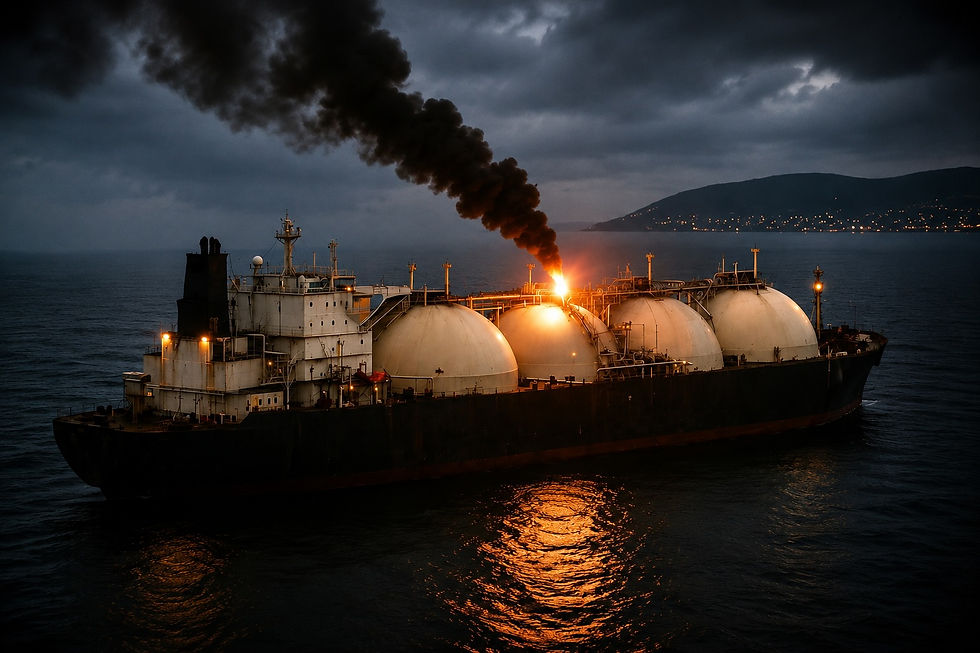
Location: Strait of Hormuz. Time: 0300 hours.A fully laden tanker makes slow headway through the darkness when a violent explosion tears through the silence. Steel shudders, alarms begin to clang, and the crew races to emergency stations. Within minutes the operator, charterer, insurers, cargo owners, financiers, and governments are responding. What began as an attack on a single ship has become an international commercial event.When a missile strikes a tanker carrying hundreds of millions of dollars in assets, who actually pays? The obvious answer is the shipping company. The correct answer is far more complicated. This article argues that the true target is the financial architecture that supports global maritime commerce.
II. The Modern Tanker: A Floating Financial Enterprise
Modern tankers are financed, owned, operated, insured, and chartered through separate entities because this structure lowers costs, spreads risk, and makes global trade more efficient. A vessel may be financed in China, operated from Greece, registered in Bermuda, insured in London, and carry Middle Eastern energy to Asia. The ship is therefore a floating commercial enterprise rather than a simple piece of transportation.
III. One Voyage, Twelve Stakeholders
Every voyage links lenders, leasing companies, registered owners, operators, charterers, cargo owners, Hull & Machinery insurers, P&I Clubs, war-risk underwriters, reinsurers, ports, and end customers. A case such as GasLog Shanghai demonstrates how one attack can expose parties across several continents simultaneously. The physical damage is localized; the financial consequences are global.
IV. What Happens When the Missile Hits?
The crew's first priority is saving lives and stabilizing the ship. Almost simultaneously, emergency notifications reach operators, insurers, flag states, cargo interests, and naval authorities. Surveyors are dispatched, salvage options evaluated, freight markets react, and underwriters reassess war-risk exposure. Long before repairs begin, the commercial consequences have already spread.
V. Who Actually Pays?
The answer is everyone. Shipowners lose earnings while vessels are repaired. Operators absorb disruption. Cargo owners face delays and replacement costs. Insurers and reinsurers absorb claims. Banks reassess collateral and credit exposure. Governments bear security and response costs. Freight rates, insurance premiums, and transaction costs rise across the market, affecting businesses and consumers far beyond the conflict zone.
VI. Conclusion
Modern maritime coercion seeks to increase the cost of commerce as much as it seeks to damage ships. A successful attack ripples through shipping, insurance, finance, energy markets, and international trade.So who pays?Everyone.A missile does not merely strike a tanker. It strikes the global economy.
Comments