
VENEZUELA'S REAL OIL CRISIS. Why the World’s Largest Reserves Became an Economic Dead End
- lhpgop
- Dec 22, 2025
- 6 min read

Executive Summary
Venezuela’s oil crisis is not the result of a single policy failure or sanctions alone. It is the outcome of geology, economics, and governance colliding. Venezuela possesses enormous oil resources, but they are overwhelmingly extra-heavy, capital-intensive, and unforgiving of mismanagement. When the country nationalized its oil sector and expelled international oil companies (IOCs), it removed the only actors capable of operating such assets sustainably.
This report explains:
How oil companies demonstrate value to investors
Where Venezuelan oil fits within a global IOC portfolio
Why oil quality matters more than sheer quantity
What nationalization cost foreign firms—and Venezuela itself
Why Donald Trump frames the issue as restitution, not profit
Why even a post-socialist Venezuela faces a long, painful recovery

I. How Oil Companies Show Value to Investors
Oil companies are not valued on ideology or reserve bragging rights. They are valued on their ability to convert proven, economically recoverable reserves into reliable free cash flow over time.
Core Valuation Drivers
1. Quality-Adjusted Proven Reserves (1P)
Only reserves with ~90% extraction certainty count fully
Heavily discounted for poor quality, high cost, or political risk
2. Free Cash Flow (FCF)
Cash left after operating costs and reinvestment
Determines dividends, buybacks, and debt reduction
3. Capital Discipline & ROIC
How efficiently capital is deployed
High reinvestment burdens reduce valuation multiples
4. Jurisdictional Stability
Contract sanctity
Rule of law
Currency convertibility
5. Decline Profile
Long-life, slow-decline assets are prized
Assets requiring constant reinvestment are penalized
Bottom line:
Investors reward predictable, low-risk cash generation, not raw barrel counts.
II. Where Venezuelan Oil Sits in an IOC Supply Chain
In an international oil company portfolio, Venezuelan oil historically functioned as a strategic but marginal component, not a core profit driver.
Venezuelan Crude Characteristics
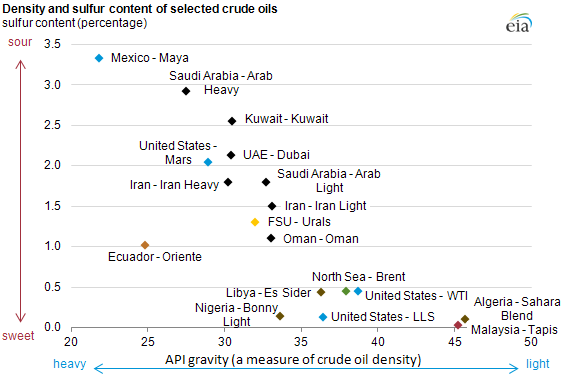
API gravity: 8–16° (extra-heavy)
High sulfur and metals
Requires:
Diluent blending
Upgrader facilities
Specialized refining
Portfolio Role
Not a loss leader, but not a top performer
Margins thinner than:
U.S. shale (good acreage)
Offshore Brazil
Guyana light crude
Economically viable only at scale and with flawless execution
For IOCs, Venezuelan barrels were:
Tolerable when managed professionally
Replaceable when risk escalated
Markets already priced them at a discount.

III. Oil Grades: Quality Over Quantity
Simplified Oil Quality Spectrum
Grade | API Gravity | Typical Economics |
Light sweet | 35–45° | High margin, flexible |
Medium | 25–34° | Moderate margin |
Heavy | 10–24° | Low margin |
Extra-heavy | <10–16° | Capital intensive, fragile |
Venezuela’s reserves are concentrated at the bottom of this spectrum.
Operational Reconciliation Required
To integrate Venezuelan crude, an IOC must:
Blend with imported diluents
Maintain complex upgrader systems
Schedule specialized refinery runs
Absorb higher downtime and capex
This makes Venezuelan oil structurally inferior to lighter alternatives.
IV. Nationalization: What It Cost International Oil Companies
When Hugo Chávez nationalized oil assets (2006–2007):
Direct Corporate Impact
Seizure of equity stakes
Loss of sunk capital
Forced contract renegotiations
Estimated losses (conservative):
ExxonMobil: ~$2–3B
ConocoPhillips: ~$4–5B
Chevron: ~$1–2B
European majors: ~$5–10B combined
Arbitration awards were issued—but largely unpaid.
Market Reality
Venezuela exposure was a small share of IOC portfolios
Losses were mostly non-cash write-downs
Stocks tracked oil prices and capital discipline—not Venezuela
Big Oil survived. Venezuela did not.
V. What Nationalization Did to Venezuela’s Economy
Before nationalization:
~3.2 million barrels/day production
Steady foreign capital and expertise
After politicization of PDVSA:
Engineers purged
Capex diverted to social spending
Maintenance deferred
Corruption institutionalized
Results:
Production collapsed below 1 million bpd
Oil revenue imploded
Imports collapsed
Currency hyperinflation
Mass emigration
Economy contracted by over 70% at its worst
Oil did not fund socialism—socialism consumed oil.
VI. Why President Trump Wants the Oil Fields Returned
When Donald Trump speaks of “getting the oil fields back,” the motive is not commercial extraction.
Strategic Rationale
Property Rights Enforcement
Prevents expropriation from becoming permanent
Deterrence
Signals to other regimes that theft has consequences
Regime Delegitimization
Frames PDVSA control as stolen, not sovereign
Avoiding the Cuba Trap
Refusing to let time legitimize nationalization
The oil itself is low-margin.The precedent is priceless.
VII. The Cuba Parallel (Briefly Introduced)
After Fidel Castro nationalized U.S. assets in 1960:
Property claims froze
Sanctions hardened the regime
Expropriation became permanent through delay
Trump’s Venezuela posture reflects the lesson:
Unanswered nationalization becomes irreversible.
(A full treatment of Cuban nationalization and its long-term consequences is reserved for the Appendix.)

VIII. The Post-Regime Reality: Why Oil Won’t Save Venezuela Quickly
Even under a new government:
Oil quality remains poor
Infrastructure repair costs exceed $100–150B
Security and political risk persist
Capital will be slow, conditional, and expensive
Oil revenue will go first to:
Repairs
Debt
Imports
Social stabilization
Not prosperity.

Final Conclusion
Venezuela’s oil crisis is not a mystery and not a conspiracy. It is the predictable result of marrying the world’s most difficult oil to a political system that destroyed capital, expertise, and trust. International oil companies lost assets—but Venezuela lost its economic future. Even after socialism, recovery will be slow, fragile, and constrained by geology and history. Oil will help eventually, but it will not redeem Venezuela quickly.
Appendix A: Cuba and the Permanent Cost of Nationalization
How Delay Turned Expropriation into a 60-Year Economic Dead End
4
A. The Cuban Nationalization Timeline (Condensed)
1959
Fidel Castro assumes power.
1960
Nationalization of:
U.S.-owned oil refineries (Esso, Texaco, Shell)
Sugar plantations
Utilities and banks
No compensation provided.
1961
Bay of Pigs invasion fails under John F. Kennedy.
Castro regime survives → expropriation normalized in practice.
1962–1964
U.S. embargo imposed.
Property claims frozen, unresolved.
Cuba aligns with the Soviet Union.
B. The Legal Reality: Property Lost, Claims Preserved—but Unenforced
Over 5,900 certified U.S. property claims (FCSC)
Estimated value at time of seizure: ~$1.9 billion (1960 USD)
Adjusted value today: $8–10+ billion
Zero restitution paid
Over time:
Claims became diplomatic abstractions
Assets decayed or were repurposed
Expropriation hardened into “history”
C. Economic Consequences for Cuba
Despite:
Soviet subsidies
Preferential trade
Strategic importance
Cuba experienced:
Chronic underinvestment
Infrastructure decay
Low productivity
Persistent poverty
Dependency rather than development
After the Soviet collapse:
“Special Period” austerity
Near economic collapse
Long-term stagnation
Key lesson:
Nationalization without restitution did not produce sovereignty—it produced dependency.
D. The Strategic Lesson for Venezuela
Cuba taught U.S. policymakers that:
Time legitimizes theft
Sanctions alone do not restore leverage
Unresolved expropriation becomes permanent
Regimes outlast patience
Trump’s Venezuela posture reflects this lesson:
Keep property claims alive
Tie legitimacy to restitution
Refuse to let nationalization “age into sovereignty”
E. Why Venezuela Is Not Yet Cuba—but Could Become One
Cuba | Venezuela |
Expropriation accepted over time | Expropriation still contested |
Claims frozen | Claims actively referenced |
Regime normalized | Regime delegitimized |
Oil marginal | Oil central but degraded |
The window to avoid a Cuba-style permanent loss still exists for Venezuela—but it is closing.
Appendix Conclusion
Cuba demonstrates that nationalization is not a temporary political act but a permanent economic decision. Once expropriation survives its first challenge, it becomes normalized, and recovery becomes generational rather than immediate. Venezuela’s tragedy is not that it followed Cuba ideologically—but that it followed it structurally. Whether it escapes the same long-term fate depends on whether property rights are restored before history hardens.

Venezuela’s True Oil Crisis
Endnotes & Sources
Endnotes
[1] Oil Company Valuation & Reserves
Society of Petroleum Engineers (SPE), Petroleum Resources Management System (PRMS) – definition of proved (1P), probable (2P), possible (3P) reserves.
Damodaran, Aswath. Valuing Natural Resource Companies. NYU Stern School of Business.
BP, Statistical Review of World Energy (multiple editions).
[2] Oil Quality & Economics
U.S. Energy Information Administration (EIA), Crude Oil API Gravity and Sulfur Content.
IHS Markit, Heavy Oil and Extra-Heavy Oil Economics.
API (American Petroleum Institute), Crude Oil Quality and Refining Impacts.
[3] Venezuelan Oil Characteristics
U.S. Geological Survey (USGS), Assessment of the Orinoco Oil Belt.
EIA, Venezuela Country Analysis Brief.
PDVSA historical technical filings (pre-2007).
[4] Nationalization & Corporate Losses
International Centre for Settlement of Investment Disputes (ICSID):
ExxonMobil v. Venezuela
ConocoPhillips v. Venezuela
SEC filings (10-K) from ExxonMobil, ConocoPhillips, Chevron (2006–2012).
Financial Times, Wall Street Journal reporting on arbitration outcomes.
[5] PDVSA Decline & Economic Impact
OPEC Annual Statistical Bulletin (production figures).
IMF, World Economic Outlook (Venezuela GDP contraction).
World Bank, Venezuela Economic Indicators.
Brookings Institution, The Collapse of Venezuela’s Oil Industry.
[6] Rehabilitation Cost Estimates
Baker Hughes / Schlumberger technical assessments (industry commentary).
Atlantic Council, Rebuilding Venezuela’s Oil Sector.
CSIS, Venezuela’s Oil Industry: Prospects and Challenges.
[7] U.S. Policy & Property Rights
U.S. Treasury (OFAC) sanctions documentation.
U.S. State Department statements on expropriation and arbitration.
Public remarks and policy statements by Donald Trump (2017–2020).
[8] Comparative Case: Cuba
U.S. Foreign Claims Settlement Commission (FCSC), Cuban Claims Program.
Department of State, History of U.S.–Cuba Relations.
University of Miami Cuban Heritage Collection.


Comments